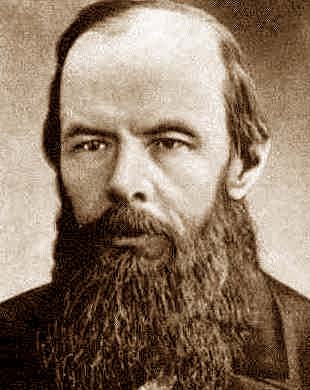
Tuesday, April 10, 2012

I'm Sorry

For this week's AtoZ Challenge, I'm presenting a 6-part story.  Part One, yesterday, is here.
-----------------

Darrel Preston stood outside the gates of the Compound, hands deep into his coat pockets. It was February Sixth. Seventh. He'd stopped thinking about dates after President Homb's speech yesterday. They just didn't seem to matter any longer. Spend your last days with the people you love, she'd said. He had sat in stunned silence through the whole thing, fully aware of her every word, and as soon as the screen darkened, he stood up, packed a backpack, and headed out the door.

Jodie was a thousand miles away in St. Louis. Traffic would be terrible, Darrel thought, so he hit the road as soon as possible. It had taken two straight days of driving, but he'd made it, just like he said he would. Jodie was reluctant at first, but through the desperation in his voice she'd agreed to meet him. The kids wouldn't be there, she made that clear. Darrel said he understood.

A door slid open and Jodie walked out. She was as beautiful as the day they'd first met. "Hey," she said, pulling a cigarette from her jacket. Darrel had always hated it when she smoked, and she knew it. He let it slide. 

"Hey. It's good to see you."

She shrugged, inhaling smoke and tar and cancer. He wondered how long she could keep the bile inside of her. He almost expected to see it leaking out her eyes. "I've got ten minutes," she said, smoke billowing from her mouth as she spoke, like a manhole vent in the early morning. "Maybe less." 

Darrel's heart pounded. Things weren't going well. Not well at all. He'd just wanted to come and see his wife and sons, to hold them all again and be a family once more before everything stopped. He'd practiced his apology speech during the car ride until he could say it backwards, but now the words might as well have been in Farsi. Darrel searched her eyes, looking for just a hint of compassion. An impenetrable ocean of black stared back at him.

"I, uh. How're the boys? How are they taking the news?" Stupid question.

"I didn't tell them," Jodie said. "No need."

Darrel nodded. "Good. That's good. I was worried that--"

"If you were worried," her words slammed into him, "then you wouldn't have gone and did what you did. If you would have thought about somebody other than your own sorry self for just one second then you wouldn't have screwed up so bad. But you didn't, and now look at you. You come back here wanting vindication and liberation from your guilt, expecting me to forgive you just cause the world's ending. Well I ain't wired like that, Darrel. I ain't got it in me to forgive you, not after what you did to us. It don't work that way."

Darrel's ears filled with a ringing noise. Jodie was still talking, but her words were drowned from the tinny squeal in his ears. He had to find a way to gain control of this situation before it got any further out of hand. He had no clue what to do. He tried to pull his eyes away, but found that they were stuck. There is true rage behind those eyes, he thought. His face was burning up. This was definitely not going as planned.

"I--"

"What did you expect me to do? Welcome you in like a returned soldier? Gah." She threw her cigarette down. Darrel stared helplessly at her. He felt like a scolded dog. "My break's up. Goodbye, Darrel." Jodie turned to go. With a will he didn't know he possessed, Darrel reached his hand out and grabbed her jacket, like he could pull her back. He was on his knees holding on with everything he had in him.

"I'm so sorry," he said, tears pouring down his face. Jodie's back was to him, but he could tell that she was listening. "You're right. I didn't think. I never do. I've never deserved your love, and I don't understand why you married me in the first place. You were too good to me, and I took that love and spat in its face. God, Jodie, I am such a fool. It's been three years since I've saw them, since I saw you, and it ain't been an easy three years. I've been meaning to call, but it just ain't ever felt right. But now, that, you know, it's ending, my priorities have came into focus. I'm just sorry that it took this long."

He was still on his knees, holding her jacket in his hands. "Goodbye Darrel," she said, her voice a blank slate of emotions. "I don't want to see you again." She pulled away, stomping back through the Compound's door.

Darrel sobbed freely. "I'm sorry," he choked.

Monday, April 09, 2012

The Lies of Locke Lamora, a Review

There are many different types of people throughout the port city-state of Camorr. You've got the gentry who living high above the filth and grime of the lower city. You've got the yellowjackets patrolling the town, who seem to be more willing to take a bribe than to actually do any policing. There are priests and priestesses of the Twelve, some more pious than others, but all respected by the cityfolk. There are pawnbrokers and money lenders, sailors and spice merchants. There are many people in Camorr, many honest folk trying to make an honest living. And then there are the thieves.

Locke Lamora has had a knack for stealing things ever since he was a young lad. Taken by the Thiefmaker at an early age, the orphan boy proved to be more than the Thiefmaker could handle. Locke was traded (sold) off to another man, the Blind Priest of Perelandro named Chains. Here, under the tutelage of the "blind" wizened man, Locke began to learn the true art of thievery and deception.

The Lies of Locke Lamora is a fast-paced yarn that guarantees to keep the Reader up long past bedtime. Locke is a fascinating character, instantly sympathetic and charming, but he's not the kind of man you'd necessarily want to be hanging around with. He's gifted at slight-of-hand, as is obvious from his introduction to the story, but he's also got a knack for bringing trouble. Lies is, at its simplest, a heist story about Locke and the Gentleman Bastards (the name of his gang) trying to rob a certain wealthy noble. The story is, however, not simple, and when one man tells lies for a living, life's bound to get complicated.

There are many memorable things from the book. What comes to mind first is the humor. Scott Lynch writes bloody brilliant dialogue (albeit rather blue) that more than once had me cackling like a loon. What's more, the dialogue comes across as genuine, almost as if Lynch spent some time with some con men in his day and picked up on the lingo. Even under pressure, Locke never loses his sarcastic mouth, and it was this humor that really shined.

Another piece of the book that was equally enjoyable was the fantastic world building. The city-state of Camorr is built on the ruins of some ancient civilization known as the Eldren. Not much is revealed about these mysterious ancients other than the ubiquitous glass structures that they left behind. Man does not know how they lived or what they did, and Lynch doesn't offer much (any?) assistance to the Reader, either. He hints at magic and arcane secrets, but hints are all we're given. This offered a lot of depth to the book, but it also leaves one a bit frustrated, too, as answers aren't forthcoming. I could go on and on about the world building, but I'll leave it with just this one piece, so as not to spoil anything.

Scott Lynch has sold me to his world from just one book. I'm curious to know so much more about so many things, but I'm also eager to get back with Locke again, too. The book is presented in an interesting way, following a Chapter-Interlude-Chapter method. Each chapter deals with the present, that being the heist story, while each Interlude deals with something else. For much of the book the Interludes are like a flashback for different characters, but as the book progresses, these sometimes become folktales or history lessons on the world. I thoroughly enjoyed this, and felt that it did wonders with the pacing of the novel.

The Lies of Locke Lamora has been out for a few years now. If you've not read it (or never heard of it, for that matter), then I suggest that you remedy that. The story telling is impeccable, the characters are unforgettable, and the action is high. There's humor aplenty, but sadness and despair aren't strangers, either. All in all, I'm not sure why it took me so long to read this book, but I'm ever so glad I did. Highly recommended.

Hopeless

The theme I established for this week involves creating a short fiction piece from the Letters.  I've got H-M to work with.  This is the first piece, "Hopeless," which is mostly exposition.  Thanks for reading.
-----

Henrietta Hombs smiled out at the crowd before her. She could do this, she thought. "Good people," she began, her right hand raised as if it could somehow stop the whispering. "I'm here tonight with a report that sounds like it was lifted from the pages of a horror novel. If only it were so. However..." Henrietta stalled, scratched her face, cleared her throat. "President Austen once scribbled in her journal that it is a truth universally acknowledged that a President in possession of grave news must put on a false-face and pretend otherwise. 

"Ms Austen, as I have become aware, did such that. During her term the Western Rebellion had just ended and it was imperative for the President of the United States to appear in control. Much has changed over the last two centuries, but there are some things that have not." Henrietta paused again. She tried to find the compassionate eyes of her husband in the crowd, but the white light of the cameras essentially blinded her. As if she needed another handicap.

"I received a report not twenty-four hours ago that our world will be ending within the week." Whispers. A guffaw. "We have reached the terminus and there is nothing we can do to stop it. Physicists once thought of time as an infinite line, having no beginning nor end. It turns out that there is, in fact, both a beginning and an end, and we are all quickly approaching the latter.

"I do not have the vocabulary to explain this here, but the data has already been published to the Department's website, if anyone cares to find meaning. My purpose in this speech is three-fold. First, I implore you to heed my words as truth and to spend your last days with the people you love doing the things that you enjoy. Second, I beg you to remain as calm as you can and to act with charity and love, not selfishness and greed. Lastly, and perhaps most importantly, is that I ask you to relinquish any hope that you may be clutching. This is an irrefutable and inescapable event, and the sooner you realize that we are all doomed the sooner you can get on to doing the first two points.

"I have enjoyed serving as this nation's final President, and I beg your forgiveness for not finding a way out of this situation. Believe me, we have tried. It is a hopeless situation. Thank you, and may God save us all."

Saturday, April 07, 2012

God and Gifts

The infinite creator of the universe loves me.  At the start of everything, before He spoke light and time into existence, He knew me.  He knew the kind of person that I would be, the kinds of thoughts I would think, the kinds of words I would say, the kinds of sins I would commit, the kinds of pride I would exhibit.  He knew all about me, all about us, and yet He still loved me, He still loved us.

How much?  God loved us enough to fully become Man in the form of a man named Jesus.  Jesus, the only Son of the Father, loved me.  He lived a perfect and spotless life because He knew that sin had to be defeated and that the Father's judgment and condemnation had to be completed.  Why?  Because we had sinned by disobeying His single command, to not eat of the Tree.  We were all subsequently cursed, and we still are, but we're no longer obligated to live under that curse.

Jesus, being God in flesh, lived for around 33 years before being murdered/executed.  In all His time here on earth He never once sinned.  He never once stopped loving His fellow men.  He never once stopped loving me.  He knew exactly what was required to fulfill God's justice, and He freely gave of Himself so that we could have eternal life.  He knew that we would be unable to live perfectly and that we would be consumed by God's wrath and found wanting.  He knew that the only way to avoid that was to sacrifice Himself and appease the sin debt that was required.

So He did.  He lived a holy life by loving God with His whole heart, soul, body, and strength.  What's more, He loved His neighbor nearly as much, to the point that He would lay down His life for them.  Then came the cross, the terrible pain of crucifixion and asphyxiation and nails and thorns.  Then came the emotional turmoil of imminent death.  He knew what was coming, that the Father would remove His Presence from the Son.  They had been in a holy communion of Three since before time began, never separated, and yet the Father would have to turn His back on His only Son because of the sin that Jesus was taking on.

And He did.  And darkness fell.  And the veil tore from the top downward.

Jesus was placed into a tomb, a large stone was rolled in front of it, and a guard of Roman soldiers was put there to make sure nothing mischievous happened.  Man, however, could not stop what was coming.  On Sunday something not mischievous but rather magical happened.  Jesus defeated hell and the grave.  He arose, resurrected, putting down death and walking again on earth.

He was seen by many.  He lived among men for forty more days and then He ascended--literally--up to heaven.  He said He was leaving so that something better would come.  He gave us the Spirit, God, to dwell within us.  All we had to do was trust Him, Jesus, and follow His commands.  What were they?  To love God with our whole hearts, souls, bodies, and minds and to love our neighbors as ourselves.

Salvation is simple.  Salvation is complex.  Salvation is the greatest gift Man has ever received, and it is the greatest gift I have ever been given.  Greater than Keisha's love for me.  Greater than Avonlea.  Greater than anything I can imagine.  God loves me.  He loves me.  He loves me.  And He loves you, too.

Merry Christmas.  Happy Easter.  God's gift is free for the taking.

(If you'd like to talk about any of this, feel free to send me an email if you'd like.  I'd love to discuss what God has done in my life with you.)

Friday, April 06, 2012

Fragments.

I'm struggling with the Letter F.  I might have been iffy about yesterday's letter, too, even though I knew I was going to write something about engineering.  What it turned into was something else entirely.  I don't want that for today.  I want something short for a change.  I thought about doing a Flash Fiction Friday, as it was practically begging to be done, but I'm doing a whole week of fiction next week, so I decided against it.  Instead, I offer fragments of unfinished things in various drafts folders stored throughout the Web.  Some are complete thoughts.  Others, not so much.

-----

He brushes teeth for a living.
That's all that he can do.
He eats nothing on Thanksgiving
but a box that tastes of glue.

He's a monkey spaceman pirate
Straight from Planet Argumflax
And if you give him carrots
he'll fill your brain with useless facts.

-----

The knife pierced between his shoulder blades once. Twice. Three times. Satin hands caught him as staggered and pitched forward. He knew their touch intimately. Innately. "Mother?"

-----

All the clocks stopped working simultaneously. Chaos ensued.

-----

The last several posts I've written have gone stagnant or into remission.  They simmer in the lineup, all bubbly and noxious.  The same thing that happened to them is happening to this one.  I'm stuck.  See, I've not really ever been one to believe in a writer's block, but lo, I seem to find myself against one.  I don't know where or how to proceed.  I could write in full about what Avonlea's been up to, how she's been sleeping much better and feeding even better than that.  She's got another appointment tomorrow to get more immunizations, poor thing.  She's twisting her hands and laughing and smiling and grunting and being quite adorable and entertaining. Or I could talk about Keisha and how I'm trying to be a better husband than what I am, how she is such a beautiful, wonderful wife that God saw fit to bless me with.  I could talk about the Christmas, how it cometh like a gust of wind through a paper mill, how most of our gifts are bought, many wrapped, and yet there's no snow.  There's much I could talk about, but I just don't feel like it.

No, really, I'm not even sure where I'm going.

-----


Do you ever think about the way we do things?  Why, for example, do we have stores like Wal-Mart? Why is our education system from K-12? Why is a full day's work made up of only eight hours (shouldn't that be called a third day's work)?  Why do we have programs and routines, habits and norms?  Why do we do church the way we do?  And even more pointedly, why do we just accept these things for what they are?

"Don't rock the boat" we're told, and yet we admire the people that do.  Without boat-rockers things would be stagnant and wretched.  Without boat-rockers there would be no revolutionaries, no activists, no reformers.  But for the life of me I cannot figure out why we don't rock the boat on some things.
fun·da·men·tal/ˌfəndəˈmentl/
Noun: A central or primary rule or principle on which something is based
I've come up with a few possibilities.

It's how we're programmed.  As babies we learn that food is good.  Food is comforting.  Food satisfies the empty feeling in our tummies.  Thus, we assume that food is good and necessary, and we bury this fundamental in our brains.  As we age this type of thing evolves with us, and we assume things are good because they make us feel good.  But somewhere along the lines we substitute (or possibly confuse) good with truth and we end up
-----

I sometimes wonder how close I am to madness.  It's like the line that separates sanity from psychosis.  Sometimes I'm not sure which side of the line I'm on.

I think this happens when life catches up with me.  Rush after rush after rush after whatever

Thursday, April 05, 2012

Engineering Equations and Existentialism

There are certain equations that I use more often than others.  The simplest and most frequently occurring is the Rational Method equation.

Q = CiA

The Rational Method has its roots in the mid-nineteenth century (Chow, 1988, Page 496) and is likely the most common method for computing discharge in hydrology.  Usually Q is calculated in cubic feet per second, and you know what, who wants to know any more else about this?  Honestly, once you saw that equation up there, did you skip down to the end of the post?  Is anyone even reading this line?  Hello?

I once found a barrel filled with everything I've ever desired, and after I saw it, I immediately forgot its contents.  I took the barrel, buried it deep in the ground, and went on with my life like nothing had happened.  Shortly thereafter I found myself standing at the checkout line in the gas station next to the Kroger on Third Street with a bottle of Faygo in my right hand and a pack of Orbit in my left beside anything a fox can do to a log or something.  Millard Fillmore  was there, as he always is.  So was the Great Somnambulist.  It was a meeting of the minds, so to speak.

And the cashier, he looked at me and said, "Hey, you no want the box?"

"What box?" I ask.

"The box," he said, as if that cleared things up between us.

"Listen," I began, but before I made it any longer into my diatribe I was interrupted by President Fillmore. When he speaks there is a power about him, like when Gandalf puts Bilbo in his place at the beginning of The Fellowship of the Ring.  ("Bilbo Baggins, do not take me for some conjurer of cheap tricks.")  The room even gets that nightshade darkness about it.

"Sir." The President's voice cuts through the air.  "My man does not fathom it yet.  He is prohibited to understand.  Please do not open his eyes until it is time."  My mind reels.  The taste of honey is strong in my mouth and I'm thinking back to something I once read for class.
Commonly, Q is in cubic feet per second (cfs), i is in inches per hour, and A is in acres, and the conversion (1 cfs = 1.008 acre-in/hr) is considered to be included in the runoff coefficient [C].  The duration used for the determination of the design precipitation intensity i [see above] is the time of concentration of the watershed.
It's Chow again, rising back to the flotsam.  We're a page over now.  Oddly, this is how my brain thinks.  Sporadically.  With brackets and parentheses.  The cashier gives me an honest frown, like he knows what I saw in the barrel that's buried out in the wilderness of Kentucky and knows that it's out of my reach.

"What's going on here?" I ask, but no one says anything.  The Great Somnambulist scuttles away, disappearing out the door and into the gloaming.  "That's a dollar ninety-four," the cashier announces.  Dazed, I hold out two one dollar bills.  He takes them from my hand, avoiding my eyes.

President Fillmore places a gentle hand on my shoulder.  "Do not worry, pilgrim.  You'll know soon enough."  And I'm out the door, alone once again, sipping on my Faygo and wondering exactly what had just happened.

Wednesday, April 04, 2012

Dostoevsky and Doritos

Many proclaim Fyodor Dostoevsky's The Brothers Karamazov to be the greatest novel ever written.  In part of my 2012 Manifesto, one of my hopes was "to finally read The Brothers Karamazov."  I started it in January, reading from the Constance Garnett translation that I own.  I trudged along for a bit, weighted down by the heavy prose and extremely long monologues.  Around page 60 I went to the library and checked out the Larissa Volokhonsky translation, as it was said to be truer to Dostoevsky's original tone.  I read on, still wondering where the story was going, still determined to make it through the 750+ pages.  Around page 100 I paused and read another book (The Reapers are the Angels, which was excellent, review here) to give myself some space, take a deep breath, and ready myself to jump back in.  By page 140ish I had stabbed myself in the eyes repeatedly and rued the day I decided to read this book.  My personal struggle with forsaking a book still is tough.  At 160ish I gave up.  I didn't care about anything that was going on.  I suppose all Russians in the 1800s were maniacal philosophers, from the peasants to the high-ups.  Not only that, they were all apparently somewhat psychotic and prone to outbursts of unequivocal rage/despair.

I quit.  Mom assures me that Crime & Punishment is the better book.  Mayhap I'll try it out sometime and see if my opinions of Mr. Dostoevsky change any.  If so, I may consider Karamazov again.  Or maybe I just need to be much older and wiser before attempting this again.

If Dostoevsky is depressing and dense, Doritos is the exact opposite.  I've long been a fan of the crunchy goodness that the chip brings to any type of food.  Eating a pizza?  Tastes better with Doritos neatly arranged on top of a slice.  Is that a bowl of soup?  Better crunch up some Doritos and pour them in, like you would a cracker.  What's that?  You're eating a sandwich without chips?  Fool.  You know better than that.  It's true.  If I have an addiction in my life, it's to Doritos (and pops, too, which you probably could have surmised).  I seriously eat them with almost every meal that I consume.  If you think I'm joking, well, you'd be surprised.  I think I go through a bag or two a week, and that's the 13oz size.  In my opinion, all foods benefit by adding Doritos to them.  (Mmm.  We made a meatloaf with Doritos crinkled on top once.  Delicious.)

I realize how unhealthy this sounds, and believe me, I wish I didn't desire the things so much, but I do, and there's little I can do to stop myself.  It's bad enough that if I see a flavor I've never had before that I impulsively buy it immediately.  I'm normally a store brand kind of shopper, but with these bad boys I have to have the name brand.  There's just something magical about the crunchy, cheesy bite of heaven that I find superior to any other chip on the market.

Tuesday, April 03, 2012

Change, Coffee, Community (Circular Reference)


Isn't it interesting how much we change over time? I suppose our bodies will be in a perpetual state of change until we die and go on to our final destination. Only there, in the presence of an unchanging God, will we stop developing and evolving. As a child I loathed onions and peppers, and now at twenty-six I'm planting a garden full of the things. The same can come with a genre in music that we once hated but now like, or with a film or a particular book. Truly, as fickle as we are as humans, we're inclined to change our opinions about one thing or another multiple times in our lives.

Many people dread change, so much so that there's a phobia of it: Metathesiophobia. Sometimes change is wonderful, sometimes horrible, and however it comes we're given very little choice in the matter. Change is inevitable. Change is constant. (This paradox does not escape me.) Me? I'm okay with change. I understand that there's a God out there in control of everything and that I'm not even a tiny speck of matter in this giant universe we live in. There are plenty of sudden things that happen that are earth shattering, but I realize that I'm not the one in control here and that all I can do is try and get on with things as soon as I can. Normalcy is good, but complacency and laziness not so much. That's why I challenge myself personally so often, to avoid growing lazy.

That's where coffee comes in. It's another one of those changes in my life. Used to (ten years ago), I drank those syrupy-sugary-thick cappuccino things you get for two bucks at the gas station. I liked that sickly sweetness. Now, I shudder to imagine sipping on one. I like bitter, dark coffee, especially if it's in a whole bean form straight from the land of Ethiopia. (When some friends returned from Ethiopia on an adoption trip, they brought back almost 40 lbs. of whole coffee beans.  I fortunately received some of that swag.) I like to make a pot that when I hold it up to the morning sunlight it's too dark to see through. Splash in a touch of milk or creamer and I'm a happy man.

And one thing that I love about coffee is the community that comes with it. While I usually make a half a pot a day throughout the week and am the sole drinker of that pot, it's at the Wednesday morning Coffee Talk group that I enjoy my favorite brew. This group of men is a community of brothers that I look forward to spending time with every week. We come together, chew on some scripture, and challenge ourselves with living out the love that Jesus told us to exhibit. We're not satisfied being the norm and resting in our comfort zones. No, we want to help people like Jesus did, by being real and honest, not superficial and withdrawn. In essence, we're craving change.

Many people dread change. I'm just not one of them.

Monday, April 02, 2012

A Bunch of Birds with One Stone

April First was the start date for the Blogging from A to Z challenge.  I don't normally do these kinds of things, but I thought that this sounded fun, so I thought, hey, why not?  If Dave's doing it, then it can't be that hard, right?  But then I think of how Dave blogged for an entire year straight, not missing a day, and I think of his mental fortitude, and I question myself.  I question my motives, my resolve.

Some bloggers have a theme for all 26 posts in April; others just wing it.  Me, I think I'll spontaneously* plan to do something like this.
Week 1:  Randomness (4/1-4/7, A-G)
Week 2:  Serialize a very short and likely absurd story (4/9-4/14, H-M)
Week 3:  Various Musings (4/16-4/21, N-S)
Week 4:  Undecided (4/23-4/28, T-Y)
Week 5:  Conclusion (4/30, Z)
Considering that I'm already a day late, I've decided to combine A & B into one (short) post.

-----
I would be a terrible father if I did not point out that my daughter's name begins with A.  Avonlea will be 10 months on April 9, and I'm sad to say that it's been an incredibly quick ten months.  Hard to believe just how much she's grown and developed.  She's learned to crawl (kind of) just last week, but her mobility is currently limited to a mere few inches.  She's also now sprouting fangs from the top of her mouth, though they're just barely through the gums.  At her 9-month appointment last week, she weighed 13lb-15oz, which puts her below the 3rd-Percentile mark on weight charts, but she's doing fine and healthy.  Mostly just a slobber factory at present.

I'm very blessed to have a daughter like her, and I look very much forward to watching her grow up.

For the letter B, I must discuss Baldness.  This picture at the right is a lovely aerial taken by my wife.  Truth be told, my balding bothers her more than it does me.  Last year I was shaving the whole head during the summer, but it took a lot of time to do, and it got cold come Fall.  I let my hair grow again and decided to opt out of the comb-over by shaving a simple cul-de-sac.  This is a great compromise from the full head shave, as it's very quick to do and it's cooling for the unseasonably Spring heat.

I've always been the type of person to wear a ball cap.  I remember being told repeatedly growing up that wearing a hat would make me go bald.  My response was always the same: "Yeah, well when I'm bald, I'll still be wearing a hat, so what's it matter?"  Apparently people were right, as I began going bald in college.  (It could have been engineering school, too.)  But I still wear hats, except at church, where I sit on the stage beneath the lights and play guitar, usually positioned in such a way that my head is down and a heavenly glow is likely reflecting from my top.

-----

*Can one spontaneously plan something?

Saturday, March 31, 2012

Lies of Locke Lamora Group Read: Week Four

As I mentioned, I couldn't put this book down after last week's challenge was up. As it happened, I finished the book a few days ago. (Maybe I should say that the book finished me. Wow.) This week's group read is hosted by Ashley (@ohthatashley) of SF Signal and spans from Chapter 9 through the Interlude "Orchids and Assassins."

1. In the chapter “A Curious Tale for Countess Amberglass” we learn of the tradition of the night tea in Camorr. I found that not so much fantastical as realistic – how about you?
Definitely a very practical and Realistic thing.  I can easily see women meeting in secret to chit chat and gossip about things.  Men, on the other hand, meet at the bars and docks and talk (foolishly) in the open.  It's a testament of wisdom, these late night tea times.
2. When Jean meets with what will become the Wicked Sisters for the first time, the meeting is described very much like how people feel when they find their true work or home. Agree? Disagree? Some of both?
Completely agree.  The way the text reads it's as if the hatchets were made for him, like he had some gut feeling that they were right.  This was solidified when he threw the blade.
3. Salt devils. Bug. Jean. The description is intense. Do you find that description a help in visualizing the scene? Do you find yourself wishing the description was occasionally – well – a little less descriptive?
I believe intense was the very word I used.  I might have said creepy, too.  I pictured something like Shelob or the frost spiders in Skyrim, but more vague, which added to the intensity.
4. This section has so much action in it, it’s hard to find a place to pause. But…but.. oh, Locke. Oh, Jean. On their return to the House of Perelandro, their world is turned upside down. Did you see it coming?
I did see it coming.  The world around the Gentlemen Bastards was crumbling, and there had to be casualties.  Even so, it was upsetting that the Sanzas had to die, as I loved their banter and humor.  
5. Tavrin Callas’s service to the House of Aza Guilla is recalled at an opportune moment, and may have something to do with saving a life or three. Do you believe Chains knew what he set in motion? Why or why not?
I don't know if Chains knew what he set in motion other than that he knew that being having connections to the various temples and priesthoods would be beneficial.  I really liked the flashback for Jean and the description of the cave, with the deadly balconies and walkways.  Such a brilliant thing.  And I loved Jean's quick promotions in rank and how he ultimately escaped.  I hope to see more of Aza Guilla and the rest of the Thirteen.
6. As Locke and Jean prepare for Capa Raza, Doña Vorchenza’s remark that the Thorn of Camorr has never been violent – only greedy and resorting to trickery – comes to mind again. Will this pattern continue?
The Thorn has never been violent, but the Thorn has never been out smarted, either.  However, Chains trained the Bastards in the art of thieving, not killing.  Nevertheless, the man flat told Locke he would kill him if he had to, and so Locke knows that sometimes a killing is a necessary evil.  So will the Thorn become violent?  Not like Capa Raza, I think, but he will have to perform some violent acts.  And who's to say how many violent acts one must do before he's considered a violent person?    
7. Does Locke Lamora or the Thorn of Camorr enter Meraggio’s Countinghouse that day? Is there a difference?
On the tail end of a great question we come to this one.  Is there a difference between Locke Lamora and the Thorn of Camorr?  Ultimately, I think yes, there is, in that the Thorn is the mysterious thief that plagues and cons citizens of Camorr as the need arises.  Locke is the true mystery of the book, I think.  He's the soft-hearted person that we know very little about.  Locke thinks with his heart; the Thorn with his wits.  They're not mutually exclusive characters, but they're so intertwined it's hard (as of yet) to determine who's who.

Wednesday, March 28, 2012

Grasping God's Word, a Review


Grasping God's Word is a mammoth of a book. It's used as a textbook for seminarians and other students of the bible. Me, I'm just a Sunday School teacher and a lover of the Word. So why did I read it? I was looking around on NetGalley and found an ARC for the third edition* of the book. I thought it could be helpful for Sunday School, sent the request to Zondervan, and soon I had the ARC on my Kindle.

On the down side, I've rarely had good luck with sending ARCs to my Kindle via NetGalley. Most of the time, the things are shoddy and formatted to a point where I either can't read at all or I would have to exude great effort to do so. This is to be expected some, as the books are ARCs, but they still need to be read-able. In this case, Grasping God's Word is read-able, but there are plenty of graphics that are impossible to decipher. Also, quotes and footnotes don't display correctly.

Besides this, and this stuff really won't affect the final product, I rather enjoyed Duvall and Hays' textbook. Up front, I didn't read the entire thing, but I did read a large chunk of it. For Sunday School my class is doing a "how to read and study the bible" study. Through this we are going through the various types of books (poetry, prophecy, epistles, etc.) found in the bible, and this book is a perfect tool for what my class is doing. I read the first few introductory chapters, setting up the book and how to use it.

I like the authors approach to interpreting scripture. Imagine a biblical city, all walled and dusty. There's a river flowing next to the city. On the other side is a modern city, skyscrapers and all. Connecting these two cities is a bridge. The method describes taking the message from the bible (a la the old city) and applying it to life (a la the new city). Doing this requires understanding the culture of the Old, crossing the bridge, and understanding the New. (There's more to it than that, but this is a simplified preview.)

In particular I enjoyed the chapter on epistles. It was very informative of how letters worked back in biblical times, how Paul's letters are much, much longer than an average letter of the times, and how letters were written, going so far as to break down the mechanics and structure. I personally feign interest in most of history, but this stuff was kind of interesting.

Overall, I felt that Duvall and Hays offer a great resource for reading and understanding the bible. They are passionate about correct interpretation, and they stress context very seriously. There are many different methods for reading and interpreting Scripture, and Grasping God's Word offers tools for applying the bible to our own lives. While the book goes through a somewhat repetitive approach, if you're in any way interested in getting a little deeper in the Word, then it is still a book I'd recommend checking out.

*I'm not sure what changes were made from the previous editions.  Product info is available here.

-----
FTC Thingy: Zondervan graciously supplied me with an Advanced Readers Copy of this book. I wasn't even obligated to right a review, but I enjoy this sort of thing, so I did. I also enjoy cookies and milk, or just cookies, too, though I did not receive any of these along with my book. Such is life.

Monday, March 26, 2012

The Hunger Games, a (sort-of) (film) Review

In 1998, the bombing of the World Embassy in West-Northwest Centersville, East Serbia, shook the world to its core.  In retaliation, the Serbian government conscripted all males under the age of 64 into their armed forces and established a quarantine around the entire country, with men at arms standing shoulder-to-shoulder along the perimeter.  After a fortnight of fortnights had passed and no one really noticed, the people of WNWCEB decided to stage a coup d'état and soon all the beatniks and yuppies were crowding the streets.  People complained, loudly, and the world continued to ignore them.

Far away, in the country of Panem, the President decided to start a new kind of Olympics.  Every year he would call up two children from each of the Twelve Districts and invite them to the Capitol to represent their communities.  If they won, they got prizes, usually in the form of a new Game Boy Advance game and sometimes a batch of homemade cookies, baked by the President himself.  If they didn't win, then they died.  It was a brutal sort of Olympics the President thought of.  You see, these Olympics, which he dubbed the Hunger Games, weren't really anything like the classical Olympics of old, but were instead a twisted game he devised to keep the people of Panem held under his oppressive thumb.  He figured correctly that pitting children against other children in a battle to the death would create a country of unrest.  Because of the President's totalitarian rule, people's magazines stopped arriving on time (and soon at all), and if they couldn't get their magazines and newspapers then their understanding of the world around them dwindled.  (This was pre-y2k, so the Internet hadn't yet came into fruition.)  As their freedoms compressed, their fear of the Hunger Games increased, and every year when the President made his phone calls, great tragedy would drop on to each of the Districts.

Or something like that.

I first read The Hunger Games in May 2010 (my review).  I enjoyed it quite a bit, actually, as much as one can enjoy this sort of senselessness.  Not entirely an original idea, but Suzanne Collins made a book with characters I cared about.  Katniss Everdeen was a fascinating heroine, but she was stubborn and a teenager, too.  While I can only guess at the thought processes of a teenage girl, I felt that Collins conveyed the mindset very well.

Keisha & I went and watched the movie rendition of The Hunger Games last Friday night.  The cinema was packed, of course, but everyone quieted down as the movie started.  I had some reservations about the casting of the characters, but shortly after the start I was fine with most.  The exceptions were Gale and President Snow, who I felt was too handsomely cast and too slovenly cast, respectively, if that makes sense.  (It doesn't, as I tried to explain this to Keisha and wound up making a fool of myself.)

Additionally, I, like many others, had issues with the camera work in the film.  I told Keisha during the thing that I felt like I was getting sick.  It reminded me of those roller coaster ride things with screens.  The kind that the People of Serbia no longer get to enjoy because of the problems going on over there, what with the border being closed and the ruffians crowding up the place.

Keisha's main problem was all the time spent outside of the Arena, focused mostly on Seneca and the Game Room.  She thought this pulled away too much, and I agreed.  Maybe those scenes were added to break some of the tension up?  Maybe the director wanted to show off some special effects?  Whatever the case, the wife and I didn't much care for all the Game Room time.  (Honestly, pacing leading up to the Games was a bit off, too.)

The film was tough to watch, especially when the Games began.  I knew what kind of bloodbath was coming, but still yet, wow.  And the tracker jacker scene!  Oh my.  Let's not forget the muttations, either, and how horrible that had to have been.

As I've already said, I enjoyed the movie.  It's been a few years since I read the books, so I had forgotten some of the fine details.  From my recollection, the film was a worthy adaptation of the book, though it could have done better at building up the characters.  No doubt there will be the sequels made, and no doubt they will rake in the money.  I am most interested to see how Mockingjay comes along, considering the way we Americans tend to like our movies.

I am reasonably sure that I've lost my mind somewhere along the way.  The truth is out there, and so is the fiction.  I'm not sure what just happened...

Saturday, March 24, 2012

Lies of Locke Lamora Group Read: Week Three

I was a bit too swamped to put up a post last weekend, but that didn't stop me from pressing on.  Here's the third week's questions of this most fascinating book, hosted this week by Bryce of My Awful Reviews.  You can follow other's responses there.

1. This section is where we finally get to sneak a peek at the magic in The Gentleman Bastards books. From what we read, what are your initial impressions of the magic Lynch is using? Is there any way that Locke and Company would be able to get around the Bondsmage's powers?
From how Lynch describes the powers of the Bondsmagi, they're a tough group of folks.  I expect that their power is somehow linked to the Eldren and the ancient stuff, just like I think alchemy is, but I have no idea of its mechanics or limitations.  Can the Bastards get around the Flaconer's powers?  I want to say yes, but I really have no clue.
2. Not a question, but an area for rampant speculation: If you want to take a stab at who you think the Grey King might be, feel free to do it here.
I had no guesses as to who the Grey King would be.
2.5 (since 2 wasn't really a question) Anyone see the Nazca thing coming? Anyone? Do you think there are more crazy turns like this in store for the book? Would you like to speculate about them here? (yes, yes you would)
No, that was a definite shock.  I thought that maybe she had somehow staged this so as to get off the hook and maybe pull a fast one over on her family, but I quickly realized that this was wrong.  Any more surprises ahead?  Yes, I do believe there are, and considering that I'm up to Chapter 12 now, I think I was correct.  Definitely unexpected.
3. When Locke says "Nice bird, arsehole," I lose it. EVERY TIME. And not just because I have the UK version of the book and the word arsehole is funnier than asshole. Have there been any other places in the books so far where you found yourself laughing out loud, or giggling like a crazy person on the subway?
There's been some humor and some funny lines, but none where I've laughed aloud for very long.  I do have a soft spot for sarcasm, though, and that dark humor is rich.
4. By the end of this reading section, have your opinions changed about how clever the Bastards are? Do you still feel like they're "cleverer than all the rest?" Or have they been decidedly outplayed by the Grey King and his Bondsmage?
Oh wow.  And here I was thinking Locke was incredibly smarter than the rest.  I suppose his inability to see the full picture has always been his problem, as the Interludes paint, and it looks like this scenario has not been accounted for.  But how in the world would he have been able to account for it?  So I do think they have been outplayed, at least for the time being, but I see Locke & Co. pulling out ahead.
5. I imagine that you've probably read ahead, since this was a huge cliffhanger of an ending for the "present" storyline, but I'll ask this anyway: Where do you see the story going from here, now that the Grey King is thought to be dead?
How could I not read ahead.  Lynch certainly knows how to string the Reader along, and I am loving it.  I have no idea where the story is ultimately going, and I can't help but feel like everything in this book is only a set up for the subsequent novels that follow.
6. What do you think of the characters Scott Lynch has given us so far? Are they believable? Real? Fleshed out? If not, what are they lacking?
I think they're mostly believable, especially the Bastards.  They're written in a way that I have feelings for them and their well-being, and logical enough that their decisions are Realistic.  The dialogue is especially strong, giving a conversational tone between speakers.  The different priesthoods are also very well fleshed out, where we're given bits and pieces at a time, building credibility and history.
7. Now that you've seen how clever Chains is about his "apprenticeships," why do you think he's doing all of this? Does he have an endgame in sight? Is there a goal he wants them to achieve, or is it something more emotional like revenge?
Indeed, what is Chains endgame?  I do not think it's to bring down the nobility and break the Peace as has been described earlier.  It seems too simple, too less a plan than Chains calculating mind would create.  No, I think Chains had something deeper to instill in the Bastards and unleash on Camorr.  Does it have something to do with the Thirteenth?  Maybe.  I honestly have no idea.  I don't think it's a simple revenge game, but it could very well be, bearing in mind the Interlude "Tale of the Old Handball Players."  (I know, I read ahead, but this isn't a spoiler...)
So overall the book has been highly enjoyable, and I can easily see why Lynch has such a following.  Make sure you go and check out the other blogs on the Group Read.

Tuesday, March 20, 2012

Wrestling With: Alcohol & Liberty

Used to be I was a teetotaller.  Alcohol was bad.  I knew how it affected people, how it enslaved people, how it buried itself deep into the hearts of the weak and addicted and never let go.  In my eyes, having a drink of alcohol was having a one-way ticket to hell.  This extended up through my first year or two of college, my Formative Years, as I like to call them.  These were the years when I decided to "work out my own salvation" (Philippians 2:12) and dig into my faith.

What I found was shocking.  Jesus died to give us freedom from this world, from sin, from shame, from the Law of Moses, and from every thing that binds us down.  Jesus, who had the ultimate freedom of being God, gave up all of His freedoms and became Man.  Not only that, but He completely emptied His Godhood (Philippians 2:7) and became the most humble man to have ever lived.  If Jesus had any freedoms, He gave them up so that sin would be conquered when He rose from the grave.  And He did all of that for you and me.

Paul wrote extensively on this freedom that Jesus died for.  In both the first letter to the Corinthians and in the letter to the Romans, he addressed the issue of eating food and consuming drinks offered to idols (see 1 Cor. 10:23-33 and Romans 14).  These two chapters are still relevant today, especially in regards to a Christians freedom to indulge in alcohol.  Complicating the issue is that Jesus' very first miracle was turning water into wine (John 2:1-12), and that wine was declared "good."  If the Son was there in the beginning and all of creation was made through Him, then I imagine that the wine made at the wedding was indeed very good.  Another complication is God commanding the Israelites in Deuteronomy 14 about their agricultural tithes, especially verses 24-27:

[24] And if the way is too long for you, so that you are not able to carry the tithe, when the LORD your God blesses you, because the place is too far from you, which the LORD your God chooses, to set his name there, [25] then you shall turn it into money and bind up the money in your hand and go to the place that the LORD your God chooses [26] and spend the money for whatever you desire—oxen or sheep or wine or strong drink, whatever your appetite craves. And you shall eat there before the LORD your God and rejoice, you and your household. [27] And you shall not neglect the Levite who is within your towns, for he has no portion or inheritance with you.  (Deuteronomy 14:24-27 ESV--emphasis mine)

Some translations refer to "strong drink" as "beer," as this is likely what is meant.  So here we have plenty of verses pointing to the fact that alcohol isn't implicitly bad, and in fact, Paul says that "all things are lawful" there in 1 Corinthians.  He goes on to point out that one should not offend someone by refusing the wine or the food or whatever, as this could damage the witness.

To my knowledge, the only negatives concerning alcohol in the Scriptures all revolve around one thing: drunkenness.  Drunkenness is mentioned specifically as a work of the flesh (Galatians 5:19-21), which is constantly against the desires of the Spirit.  There are also several Proverbs concerning drunkenness, none of which are positive (see Proverbs 23, for example).

How am I to interpret this?  I have to say, when my bible study leader opened this can of worms as a college freshman, I was completely against him.  I just didn't get how anyone could be so silly.  But once I read the scriptures for myself and thought through them, it was obvious to see the truth.  Nevertheless, just because I could agree that alcohol in and of itself was not sinful, I refrained from drinking.

All of that changed when my best friend struck a deal with me.  He had been drinking for a while (illegally), and I had just turned 21.  He said that he would go to church with me if I would go have a drink with him.  I thought of Jesus hanging out with the prostitutes, tax collectors, and other ruffians.  These were the people He ministered to (in addition to the poor and needy).  I said sure, and he went to church with me for the next few months.  Seemed like a fair trade.  He heard the gospel of Jesus.

My one drink had no real affect on me.  Over the next few years, I may have drank a handful of times.  To me, alcohol was just a waste of money, a luxury I couldn't afford.  Still, the fact that I was a Christian and that I would drink was a witnessing tool that I could use.  Never once did I drink too much, never once have I been drunk, and never will I.  One must be self-aware and spiritually mature in order to imbibe, I decided, and I am blessed enough to be both, though neither were easy to attain.

And then last year I was voted to become a deacon of my current church body.  One of the questions asked during my trials pertained to alcohol.  I based my answers all on scripture.  I was thence trounced and assaulted for my immaturity and ultimately denied the position*.  That shook my faith more than a bit.  I've been in church my entire life and to be told that my faith was immature and weak was a punch to the gut.  I spent the last year reading and studying even more so than normal, and you know what, my opinions haven't changed much at all.  If I'm reading my bible correctly, then everything I've mentioned above is still true in my heart.

I was asked last Sunday again about becoming a deacon.  I accepted, and now I'm preparing myself for another interrogation.  Even though my biblical understanding has not changed, I can say that I no longer am a drinker, either.  Not even on occasion.  Why?  And how did I come to this conclusion?


  • We who are strong have an obligation to bear with the failings of the weak, and not to please ourselves. (Romans 15:1)
  • For you were called to freedom, brothers. Only do not use your freedom as an opportunity for the flesh, but through love serve one another. For the whole law is fulfilled in one word: “You shall love your neighbor as yourself.”  (Galatians 5:13-14)
  • Therefore let us not pass judgment on one another any longer, but rather decide never to put a stumbling block or hindrance in the way of a brother.  (Romans 14:13)


I think about how Jesus lived, about what motivated Him.  He loved people unconditionally.  He was a servant.  He denied Himself in all, ultimately giving His life away.  He commanded us to love and serve and take up our own crosses.  If Jesus was willing and did give up his freedoms, then I can give up one for a people I love, too.  Because even though I think I am in control, I cannot control what other people perceive, and I don't want to inadvertently cause anyone to stumble.  I must be above reproach.  I also don't want my daughter to be exposed to it, and putting alcohol out of my house (save for cooking bourbon, which is simply delicious in a chocolate pecan pie) is just a step in the right direction.  Am I really losing anything by refusing myself?  No, and I fully believe that in Heaven that I will get to enjoy the wines of the Father's vineyards.  Until then, or at least until the Spirit reveals something differently in the Word and in my heart, I am relinquishing this liberty of my own volition.  To God alone be the glory.

-----
*To be fair, this wasn't the only issue, though this was the biggest.  The other one concerned tithing, which again, I gave my understanding of biblical answers and principles.  This issue has changed slightly since last year.

Friday, March 16, 2012

The Magicians, a Review

Can you like a book but hate the protagonist?

Quentin Coldwater is an angry, frustrated teenager getting ready to graduate from high school and head off to the best college he can find. From a wealthy but apathetic household in Brooklyn, Quentin's outlook on life is highly cynical and downright depressing. The only thing he's ever found joy in is from a popular quintet of novels called Fillory and Further, written by Christopher Plover. Very similar to Narnia, these were Quentin's refuge whenever life's circumstances grew difficult, even through high school. Because of his love of magical fantasy, he learned how to perform card and coin tricks with some skill.

One afternoon Quentin is walking home and suddenly finds himself heading down a different path. The cool Brooklyn weather is gone and he's standing in an unfamiliar place. Soon he is talking with Dean Fogg, who informs Quentin that he is able to take an entrance exam to a very exclusive college, the Brakebills College for Magical Pedagogy. Fogg reveals that the magic that Quentin has longed for is in fact real, and that if he passes his test then he will be invited as a student to the school.

Beyond belief, Quentin takes the test, and from there his world forever changes.

Lev Grossman's The Magicians came out in August 2009. I wasn't particularly interested in reading the book, but I wasn't disinterested, either. I didn't really have an opinion about the book, not until I read a couple of different reviews, some praising the book, some criticizing it heavily. This polarizing type of thing attracts me, so I added it to my TBR way back when. This book came up when looking over my 2012 Manifesto and trying to find an audio book to listen to while driving to St. Louis for a concert. It was long enough to last me the entire trip and still have a little left. I checked out the audio and popped it in the cd player once I hit the road.

First off, I have never read a book with a more despised protagonist, and that's saying something. I don't know how many times I complained about Quentin's attitude or stupid choices to Keisha in the reading of this thing. Granted he is in his college years through much of this book, and as a typical college age kid he's going to make some dumb choices. However, by and large, and especially considering his high intelligence, it was frustrating that Quentin consistently made poor decisions, even when he didn't want to. He would feel one way and think of how he would say something, but then he'd go off and say/do something completely different than what he was thinking. Then, afterwards, he'd mourn over his dumb choice. Not only does Quentin make dumb mistakes, but he also acts like a spoiled, pretentious little jerk, one that I wanted so badly to like.
"That's what makes you different from the rest of us, Quentin. You actually still believe in magic. You do realize right, that nobody else does? I mean, we all know that magic is real, but you really believe in it, don't you?"
See, this was the problem. The story and the plot and (most of) the side characters, they were compelling. I wanted to know how magic worked and the whys and wherefores of the side characters. The magic was vague and impressive and interesting. So was Fillory and its mysterious author. And what was Penny's backstory? What are niffins, exactly? Can I really trust this person? And The Beast... wow. There were so many good elements for an entertaining story, but Quentin wasn't one of them. I felt very little sympathy for him, even when he was deserving of sympathy. His anger and personal void was a tainting POV to use for this colorful world Grossman created.

In fact, coming through Quentin's POV I remarked to Keisha that I wondered if Grossman was pushing some sort of nihilistic message. Everything was bad. Everything was worse. Every cloud was lined in jet black and there was no grass on either side of the fence. These poor people had magic, something undeniably wonderful, and still happiness eluded the world and everyone in it.

Being that Grossman is a senior writer and book critic for TIME magazine, he is down with pop culture. In reading the book I was reminded of Narnia, though Lewis' world was never explicitly mentioned. Grossman mentions Tolkien and things from Harry Potter and Dungeons & Dragons and many other things any geek worth his salt would know about. The Magicians is an amalgam of all of these things and more, but it's sprinkled heavily with originality. This, Grossman's creativity, is what kept me going through the book.

I absolutely loved the stuff Quentin was learning at Brakebills. There was the mystery of the Fourth Year students and why no one wanted to talk about it. The professors were unique. The examinations and tests were brilliant. The disciplines were cool, how students had an affinity for certain magics and that was there major course of studies. This was by far my favorite part of the book. A jarring shift happened a little over halfway, one I was completely unexpecting. Quentin graduates from Brakebills and the Reader finds the Q. & the gang now as fully graduated Magicians. I had no idea what was coming, and what did happen I in no way was prepared for. I didn't enjoy it as much as the college years, but there was action and mystery.

If this review paints a mixed picture of Grossman's book, then I'm doing my job. Part of me enjoyed the book a lot, and part of me didn't want to finish. I feel that Grossman made some odd choices with the characters, but he made plenty of right ones, too. Most of the plot was wrapped up satisfactorily, but there were a few small things left unresolved. Unsurprisingly, a sequel, The Magician King, came out in August of 2011. I'm interested enough to find out more about this strange but familiar world of Quentin Coldwater, if only to see if the guy is ever going to change.

The Magicians is a book that any reader of speculative fiction should be able to read and enjoy if one is okay with a relatively stagnant and/or frustrating main character. It's subversive of normal tropes, and at the same time it fully embraces them.  It's definitely an adult novel, as there's plenty of boozing around, lots of drunken times, occasional drug use, and a few Rated R sexy times. As many are wont to say, it's a grown-up Harry Potter novel, but I'd be more inclined to say it's Harry Potter minus the wholesomeness and thrown into a typical college stereotype. I really did like the book, I can't stress that enough, but I really did not like Quentin.

Tuesday, March 13, 2012

Radiohead Concert (Scottrade Center 3/9/12)

I'm not sure if I can adequately describe just how much I was looking forward to this concert.  Seeing Radiohead live was a dream come true, having been a fan for many years and only growing fonder of the lads with each subsequent release they made.  So when I found out the band was doing a limited North American tour and that they'd be coming to St. Louis, a mere 4-hr drive, I was ecstatic.  I have a good friend that lives in St. Louis, who happens to be a fan himself, and we bought tickets on release day.  What followed was months of waiting and tireless hours of listening to Radiohead's vast catalog.  There have been many a day/weeks when theirs has been the only music I've played.

Finally, the day arrived.  I packed my car and headed West.

Venue: Scottrade Center, St. Louis
Status: Sold Out
Opening Band: Other Lives
Main Act: Radiohead
Time: 7:30pm, 3/9/2012

As it happened, Adam's roommate and father are Radiohead fans, too.  This was to be their fourth time seeing Radiohead, and they were as excited as Adam and I were.  So the four of us pulled into the arena to a vast and eclectic crowd.  Crowd isn't a good word.  How about horde.  There were, in my rough estimate, around 15-20 thousand people there.  We took our seats, above the mass of bodies on the floor, and cozied in.  Other Lives, a band I'd never heard of, soon came out and the night began.

Other Lives reminds me of something like Devotchka or Beirut mixed with some good ole Americana.  Jesse Tabish, lead vocals and some instruments, sounds similar to Colin Meloy of the Decemberists, but the music is a different animal altogether.  Other Lives was big, in number and in sound.  A quintet of multi-talented members, Other Lives made beautiful music so hypnotic and energetic that I would gladly pay to see them as the main act.  If you've never heard them, check out the videos for "For 12" and "Tamer Animals."  Pretty nifty, eh?  And the songs aren't too shabby either, I think.

By 8:30ish we were all ready for Radiohead, and anon the band came.  Bursting forth in applause and glorious lights, they launched straight into "Bloom," a song off The King of Limbs, its outer-space like piano licks reverberating through the air with the steady drums pushing the song along.  "Airbag," one of my favorites, from OK Computer, came up next, even though the official setlist pointed that "15 Step" was to be the second song.  (I notice that I refer to several Radiohead songs as "one of my favorites," which isn't necessarily revealing much, or it reveals a lot.)  As it happened, "15 Step" came third, with the rest of the setlist following as planned.

One of the coolest things about the show was the stage setup.  As you can see from the picture, there were these screens hanging down above the stage.  To me, they looked like pieces of a shattered mirror dangling. There were cameras set up throughout that would capture and display random band members in action.  In addition, these screens were mobile and moved with each song, sometimes reflecting out into the crowd, sometimes flat down on the stage.  Additionally, the giant LED screens as a backdrop looped beautiful, almost psychedelic colors and patterns about, adding an extra layer of complexity to a list of already complex songs.

Of the twenty-three songs played, most came from the band's newer albums.  The entire King of Limbs was played except for "Codex," and while I like this album, it sounded even better live.  I had told Adam it'd be nice to hear "Myxomatosis" and "Idioteque," and I was lucky enough to get both, with the latter being the final song of the evening.  Apparently I am not alone in loving "Idioteque" as one of the band's greats, as the entire crowd seemed to be singing along with Thom through the refrain, offering up a frenetic chorus of definite armageddon.

The possible highlight of the night came with "Karma Police."  This was the song that turned me on to Radiohead.  Something about its wonderful minor piano sounds and the mesmerizing lyrics.  "Karma police, arrest this man.  He talks in maths, he buzzes like fridge, he's like a detuned radio."  As it goes, Thom has probably sang this song thousands of times, and yet on Friday night, he forgot the lyrics.  From the onset he mixed up the order of the first verse, but never fear, the crowd picked up the slack and belted the tune.  Chagrined but good humored, Thom continued, getting to the end of the second verse and singing "This is what you get... when you forget the words."  Needless to say, we all cheered.

One thing that I usually enjoy in live shows is banter between the band or some sort of engaging the audience.  Maybe it's because I wear rose colored glasses when looking at Radiohead, but Thom kept the conversation to a minimum, and I was completely okay with it.  They were there to entertain us, play their songs, and showcase their talents.  There was no need to introduce a song or talk about its history.  The crowd, I think, didn't need this stuff, as many of us were probably very familiar with Radiohead's music.

Alas, the night dwindled down, though the excitement lingered through the double encores.  Once "Idioteque" finished, the stage lights came up and we all exited en masse, moving as independent bodies forming one large body.  My ears buzzed and I had an impression that I was glowing, but we all moved rather silently out of the building, out into the cold, windy breeze of a late Winter's night.  In the car I asked Noel and his dad how they ranked this performance with the others they'd seen.  Both said that this was the best.

I drove four hours to see the band, but I would have driven more.  The show was amazing.  The music was wonderful.  The audience was responsive and lively, but reflective and respectful.  I was a little bummed that "Paranoid Android" and/or "Climbing up the Walls" weren't played, but on the other hand, I now have an excuse to see them again, if they ever come close enough.  I'm glad to have finally saw the band, and I'm ready to see them again.


----
Note: The images used in this post were all found through Twitter and Google+.  All were shared publicly, and I claim no ownership to them.  If you want to find more, search the #radioheadstlouis hashtag.  Also, there is a 27-minute video of several of the songs is available to watch here, if you're interested.  And one last note.  Radiohead has recorded an Austin City Limits show, but there's no date yet for when it will air.  Keep it in mind.

Monday, March 12, 2012

Apology to a Dead Dog

Dear Unknown Dog,

I am so sorry.  If it's any consolation (which it's not), my wife bawled over you, sobbing unashamedly as I sat in deafening silence, hands clenched tightly around the steering wheel.  I want to be angry at you.  I want to know just exactly what you were thinking when you crossed that busy street.  I want to know whose dog you were and if you lived a good life.  I want to think that your suffering was short and as painless as possible.  I want to go back to yesterday and leave twenty seconds later.

The day was going perfectly well, an uncannily beautiful Sunday afternoon in March, and we were on our way to Bremen for a family get-together to welcome Travis back from boot camp.  Travis would have loved you, I'm sure.  I'm inclined to say that the day was going well for you, too, at least up until the point of contact.  I'm sure you'd been lounging around much of the day, soaking up the soft warmth of the sun, maybe chasing a scent of grilled food or running after a rabbit.  You had no worries, nothing besides finding a little food, a little love, and a little fun.

It's like we were on a collision course predetermined by fate and there was nothing we could do to prevent our meeting.  One second life is well.  And then you flash across the street.  I'm sure you heard the squealing tires as my car hit you.  I'm sure you smelled the burning rubber as I passed.  Did you hear my heart stop?  I couldn't swerve, y'know.  That's how so many people get into wrecks in the first place.  Maybe if Keisha and Avonlea hadn't been in the car then I would have, but I was not going to put them in any more danger.  But know that I tried--I honestly tried--to miss you.  To stop.  To prolong the inevitable.

What I saw in my rearview mirror haunts me.  I'm so sorry.  We prayed that your pain was minimal.  I was upset at our lot in life, that all of creation is tainted because of sin and that we have to deal with death.  I don't know where you were running to, Dog, nor do I know from where you were coming, but I know that you are now running in a majestic field unlike any you've ever seen before.  I'm sorry that I cut your days off short here, and that I took you away from whatever family you belonged, but most of all I'm sorry that I caused you to suffer during your last moments here on earth.  Know that it was not intentional and that I never wish to go through something like that again.

Remorseful,

Logan

Saturday, March 10, 2012

Lies of Locke Lamora Group Read: Week 1

Scott Lynch's Lies of Locke Lamora is widely regarded as something beyond special to many genre readers.  Released in 2006, the book has been on my TBR practically ever since, waiting for me to pick it up and show it some love.  That time has come, in part because of my 2012 Manifesto, but mostly due to the Little Red Reviewer's Group Read.  This seemed like the perfect opportunity for me to try out Scott Lynch's world.  (Awesomely enough, the Man Himself, Mr. Lynch, has decided to hop on the Group Read, too, and he'll be blogging at his livejournal site.  Sweet.)

For Week One, we read up through the Interlude titled "Locke Stays for Dinner."  I enjoyed the read so much that I'm almost through the Second Week's assignment, too...  The questions for Round One are below, brought to you by Andrea, the Little Red Reviewer (and self-proclaimed Locke Lamora fanatic).

1. If this is your first time reading The Lies of Locke Lamora, what do you think of it so far? If this is a re-read for you, how does the book stand up to rereading?
This is my first time, and I'm fascinated by everything I'm reading so far.  I love the Elderglass stuff, and the whole fact that Camorr is built on some kind of ancient civilization or something is possibly the most puzzling thing to me currently.  I also like the mystery of the shadow-thing that's following Bug/Locke/etc. in the beginning, and as of yet we have no idea who/what it is.  As for the Big Score, I'm really digging it.  See, I had a bit of an obsession in high school with heist movies (Snatch, in particular).  So much so that I, uhm, well, never stooped to stealing, but I did help some friends out in their lifting of a giant world map from the teachers lounge....  I schemed and plotted and ran surveillance before the Big Day, but on when it came down to it, I chickened out and instead served as a Watchman instead, kind of like the Teasers Lynch writes about.  I'm not proud of my choices and involvement, and I in no way condone theft or general skullduggery, but it's still a cool story.  So yeah, suffice it say that I'm loving the Gentleman Bastards business.
2. At last count, I found three time lines: Locke as as a 20-something adult, Locke meeting Father Chains for the first time, and Locke as a younger child in Shades Hill. How are you doing with the Flashback within a flashback style of introducing characters and the world?
I'm a sucker for the frame story, so scratch another mark for Scott Lynch in my book.  His skill at handling the timelines is deft, and I don't think I've been confused yet.  Plus, I am/was a LOST fan, so I've got no problem with this.
3. Speaking of the world, what do you think of Camorr and Lynch's world building?
I touched on this a bit in the first question, but I'm really liking it.  It has a different feel to me than many other SFF worlds that I've read.  I can't help but think that if I went overseas to Italy that this kind of stuff is exactly like what I would see, with the canals and the names and the foodstuffs.  I get the impression that Lynch's world is robust and that there's a hearty history to it that I'm only starting to appreciate.  I also like how Realistic this book reads, from how the characters act/talk to how the world operates.  So far, so good.
4. Father Chains and the death offering. . . quite the code of honor for thieves, isn't it? What kind of person do you think Chains is going to mold Locke into?
Can I answer with "I think Chains is molding Locke into a Gentleman and a Bastard?"  Religion is obviously very important to Camorr, and the fact that the Thirteenth is a denied deity by most (or most are oblivious?) catches my attention.  I'm curious as to the kind of man Chains is, and the kind of man he used to be before becoming the Blind Priest.  He must either be very devoted to his god or very ambitious with his plans.
5. It's been a while since I read this, and I'd forgotten how much of the beginning of the book is pure set up, for the characters, the plot, and the world. Generally speaking, do you prefer set up and world building done this way, or do you prefer to be thrown into the deep end with what's happening?
I love soups.  Chicken noodle.  Potato.  Vegetable.  You name it, I'll try it.  Sometimes I'm in the mood for some homemade soup, and that takes work to peel and dice the veggies, prep the meat, and measure the add-ins.  Once the works done, the soup then has to boil for quite some time before I get to enjoy the fruit of my labors, but it's okay, because not only do I like soup, I like to cook.  But sometimes I pull a can of Chunky out of the pantry and put it in the microwave.  Homemade trumps Chunky every time, but that doesn't mean that the Chunky isn't good and it doesn't hinder Chunky from accomplishing its purpose.

So far I'm very much enjoying the world of Camorr and the life and times of Locke Lamora.  I have no idea where this story is going, but I'm looking forward to making the journey.

Wednesday, March 07, 2012

Preparations for Radiohead

This is a big week for me.  For all of the Stewarts, in fact.  Keisha's brother Travis graduates from the US Marines Friday, and she and her family are going to his graduation.  Parris Island is a 15-hr drive from Stewartland.  That means that Keisha and Avonlea are fifteen hours away from me.  And when I go to St. Louis on Friday they'll be even farther.

This is the longest I've been apart from my daughter.  I must confess, I miss her.  Quite so, in fact.  She's recently learned how to snarl her nose, and it's the cutest thing I've ever seen.  And she's been laughing and talking/screaming a lot here lately, too, just learning about her voice and how to work it, I guess.  I asked her if she would remember me when she left.  Keisha says she will.  I don't know.  Who really knows how a babies mind works?  Are they existentialists?  I do think she'll break out a gummy, two-toothed smile when she sees me on Saturday.

Avonlea's not the only person I miss, though.  Keisha's gone away, too, as I've said.  And while I don't worry about my wife forgetting my face or my existence, I still can't help but miss my friend as she's away.  It reinforces the blessing that I'm thankful that I don't have a job where I have to travel very often.  These absences aren't ideal.

Meanwhile, life goes on at super speed.  They left last night.  Soon after I was at the tennis courts, trying out a newly strung racket at 8:00pm in Greenville.  My first game of the year.  Fun, that, albeit extremely windy and slightly chilly out.  Wednesday's are always busy, and I'm up and going from 5:30 in the morning until after 9:00 in the post meridian.  And tomorrow night I've got a mentee coming over and we're gonna play some Borderlands for a bit, maybe enjoy a Papa Murphy's pizza.  Then he'll go home and another group o' friends will come over and we're gonna work on some music.  I've been in a songwriting kick, and I'd like to try and see what we can come up with.  It'll be a late night, I'm sure.  And then Friday....

Friday is Radiohead Day.  It's a special day, for certain.  So special that I took a vacation day on Friday, that way I can get to St. Louis in plenty of time.  My buddy Adam told me to bring my discs and we'd hit up his favorite disc golf course, so that should be fun, as the day promises sunshine and warmth.  And that night we'll be at the arena and in awe of Thom Yorke and the gang.  Needless to say, I'm rather excited.

For the trip I'm trying to decide which audiobook to "read."  Keeping with the Manifesto and the library's offerings, I'm limited.  I'm choosing between Catch-22, Stardust, The Dragon Reborn, or The Magicians.   I've not read any of them before, but this seems like a great opportunity to get the jump on one.  But if you look at my sidebar, at the "Currently Reading" widget, you'll notice that I don't necessarily need another book added to the list.

One final note.  We're trying to increase our Coffee Talk ministry, and one thing we've done is created a website (here) as a platform to work with.  I'm a contributor to the site, a blogmaster and general updater.  The site is fresh and brand new, and it was fun crafting.  If you'd like, check it out and let me know what you think.  Any problems with the site?  Any issues at all?

Happy Wednesday!